

A cluttered car is more than just an eyesore. Loose items become dangerous projectiles during sudden stops or crashes, causing thousands of injuries each year. Beyond safety risks, disorganization creates stress, wastes time searching for essentials, and reduces your vehicle’s functionality. This guide walks you through a complete car organizer setup process, from selecting the right storage solutions to maintaining a clutter-free interior that keeps you and your passengers safer on every drive.
Table of Contents
- Key takeaways
- Preparing for your car organizer setup
- Step-by-step installation of your car organizer
- Maintaining your organized car for lasting benefits
- Troubleshooting common car organizer setup mistakes
- Explore car organization solutions at Rottalab
- Frequently asked questions
Key Takeaways
| Point | Details |
|---|---|
| Secure organizers properly | Securely attach organizers to prevent dangerous projectiles during crashes. |
| Declutter before organizing | Decluttering reduces required storage by up to forty percent. |
| Zone storage by usage | Place items in zones based on how often you need them to improve convenience. |
| Choose adjustable organizers | Select organizers with adjustable straps to fit different seat thicknesses and vehicle types. |
Preparing for your car organizer setup
Before installing any organizer, you need to clear out existing clutter. Most drivers accumulate unnecessary items that occupy valuable space. Studies show that decluttering before organizing reduces storage needs by 20-40%, meaning you’ll need fewer organizers and spend less money on solutions.
Start by removing everything from your vehicle. Sort items into three categories: keep in car, relocate to home, and discard. Keep only genuine essentials like emergency supplies, registration documents, and items you use during most drives. This sorting process reveals your actual storage needs rather than organizing around clutter.
Next, gather your supplies based on your vehicle type and usage patterns. Commuters prioritize console organizers and door pocket solutions for daily items like sunglasses, charging cables, and coffee cups. Families need backseat organizers with multiple compartments for snacks, toys, and entertainment devices. SUV drivers benefit from trunk organizers that prevent cargo from sliding during transport.
Essential supplies checklist:
- Non-slip mats or pads to prevent organizer movement
- Adjustable straps rated for your organizer’s weight capacity
- Seatback organizers with secure attachment systems
- Trunk organizers with dividers suited to your cargo types
- Cleaning supplies to prepare installation surfaces
- Measuring tape to verify organizer dimensions fit your space
Safety considerations trump convenience every time. Proper securing prevents projectile injuries during crashes, so never skip attachment steps. Avoid overloading backseat organizers beyond 1.65 pounds, as heavier loads increase injury risk during collisions. Keep all organizers away from airbag deployment zones, including side curtain airbags that deploy from roof pillars.
| Organizer type | Best for | Key features | Installation location |
|---|---|---|---|
| Seatback organizer | Families, rear passengers | Multiple pockets, tablet holders | Behind front seats |
| Console organizer | Commuters, front storage | Cup holders, phone slots | Center console area |
| Trunk organizer | SUVs, cargo haulers | Collapsible dividers, handles | Rear cargo area |
| Door pocket insert | All drivers | Slim profile, elastic bands | Door panel pockets |
| Under-seat storage | Space-savers | Low profile, slide-out access | Beneath front seats |
Pro Tip: Choose organizers with adjustable straps rather than fixed sizes. Adjustable options accommodate different seat thicknesses and allow repositioning as your needs change, extending the product’s useful life across multiple vehicles.
Explore car organization accessories designed specifically for secure installation and daily durability.
Step-by-step installation of your car organizer
Proper installation ensures your organizers stay in place and function safely. Follow these steps in order for the most secure and functional setup.
Step 1: Clean installation surfaces thoroughly. Wipe down seat backs, console areas, and trunk surfaces with appropriate cleaners. Remove dust, crumbs, and residue that prevent non-slip materials from gripping properly. Allow surfaces to dry completely before proceeding.
Step 2: Position organizers according to usage zones. Place frequently accessed items near the driver’s reach. Install seatback organizers on the passenger side first, as this position keeps items accessible to front passengers without distracting the driver. Position trunk organizers toward the rear opening for easy loading and unloading.
Step 3: Attach organizers using manufacturer-provided straps. Thread straps through designated loops and around seat headrest posts. Pull straps tight enough to prevent sagging but not so tight that they damage upholstery. Secure attachment prevents dangerous shifting during sudden stops or accidents. For trunk organizers, use anchor points or non-slip bases to prevent sliding during acceleration and braking.
Step 4: Load items into designated compartments strategically. Place heavier items in lower pockets to maintain stability and prevent tipping. Store sharp objects in closed compartments to avoid injury during retrieval. Keep emergency supplies like first aid kits and flashlights in easily accessible outer pockets. Distribute weight evenly across multiple compartments rather than concentrating it in one area.
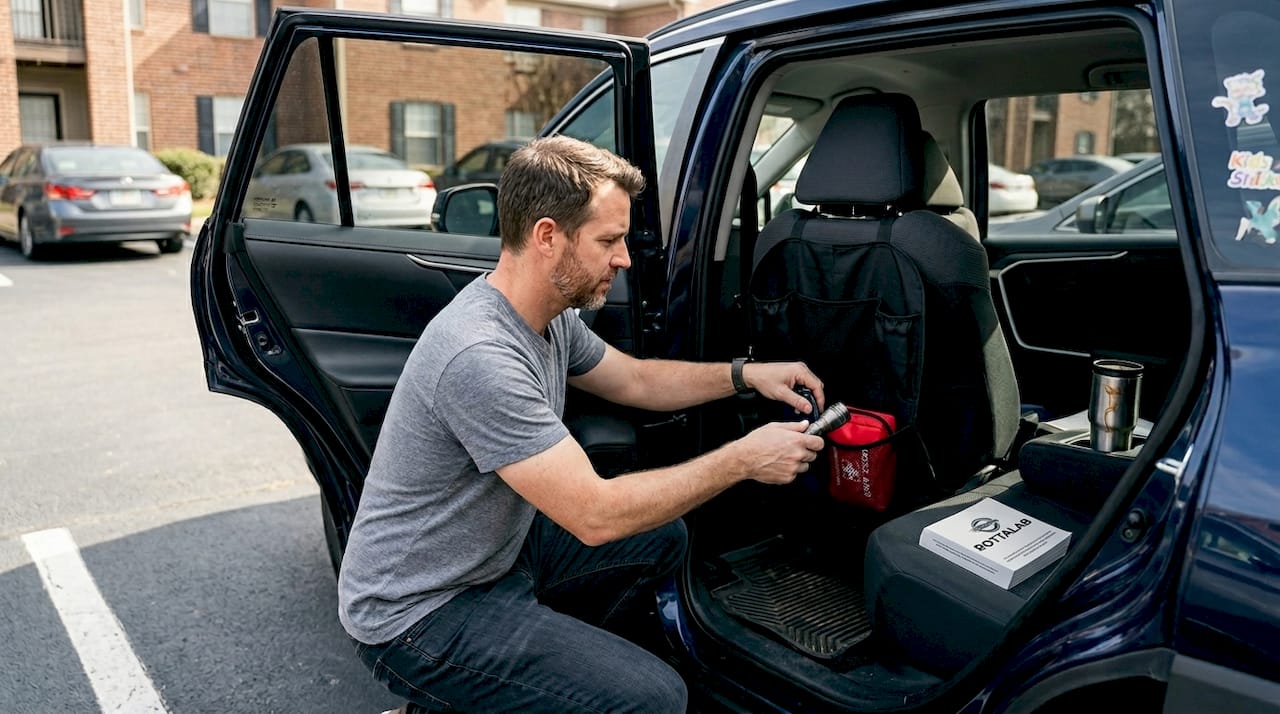
Step 5: Verify clear sightlines and airbag zones. Sit in the driver’s seat and check all mirrors. Organizers should never obstruct your view through windows or mirrors. Confirm that seatback organizers don’t interfere with front seat adjustment or reclining functions. Check that no organizer components extend into airbag deployment paths, including side curtain areas along door frames and roof pillars.
Pro Tip: Test strap tightness after your first week of use and following any long trips. Vibration and temperature changes can loosen connections over time. A quick monthly check takes 30 seconds and prevents organizers from becoming hazards.
For reliable options with proven safety features, consider the SeatVault Deluxe Car Organizer or the Sleek Car Seat Organizer, both designed with secure strapping systems.
Maintaining your organized car for lasting benefits
Installation is just the beginning. Without regular maintenance, clutter returns quickly and your organizational system fails. Establishing simple routines keeps your vehicle functional and safe.
Daily maintenance takes minimal effort but delivers maximum impact. Remove trash and unused items every time you exit your vehicle. This 30-second habit prevents accumulation that leads to overwhelm. Grab coffee cups, food wrappers, receipts, and any items that don’t belong in your car. Keep a small trash bag in your door pocket for convenience.
Weekly maintenance tasks:
- Empty and wipe down all organizer compartments
- Remove items you haven’t used in the past seven days
- Restock essential supplies like tissues, hand sanitizer, and napkins
- Vacuum organizer surfaces to remove dust and debris
- Check that straps remain tight and secure
Monthly audits ensure your system continues serving your actual needs rather than outdated habits. Schedule 15 minutes on the first weekend of each month for a complete review.
Monthly audit process:
- Remove all items from organizers and sort by category.
- Evaluate whether each item earned its space through regular use.
- Relocate seasonal items to home storage when no longer needed.
- Inspect organizer condition for wear, tears, or weakened straps.
- Reorganize zones based on how your usage patterns evolved.
- Clean all surfaces thoroughly before reloading items.
Lighter loads deliver tangible benefits beyond organization. Reducing trunk weight improves fuel efficiency, especially during city driving with frequent acceleration. Every 100 pounds of excess weight decreases fuel economy by approximately 1-2%. Removing unnecessary items also reduces wear on suspension components and improves handling responsiveness.
Rotate seasonal items to keep only current essentials accessible. Winter emergency supplies like ice scrapers and blankets move to storage during summer months. Beach gear and coolers swap in during warm weather. This rotation prevents overcrowding and ensures you can actually reach the items you need when you need them.
Consistent maintenance transforms organization from a one-time project into a sustainable system. Your car stays cleaner, safer, and more pleasant to drive. You’ll spend less time searching for items and more time enjoying your journeys.
Discover car comfort accessories that complement your organized interior and enhance every drive.
Troubleshooting common car organizer setup mistakes
Even careful planning sometimes results in issues that compromise safety or functionality. Recognizing and correcting these mistakes prevents problems before they cause harm.
Overloading compartments ranks as the most dangerous error. Excessive weight in backseat organizers creates projectile risks during crashes. Items become airborne during sudden deceleration, striking passengers with significant force. Keep backseat organizers under 1.65 pounds total weight. Distribute heavier items to trunk organizers or under-seat storage instead.
Improper securing leads to shifting during normal driving. Organizers that slide or sag distract drivers and reduce accessibility. This usually indicates straps weren’t tightened sufficiently during installation or non-slip bases weren’t positioned correctly. Stop and readjust rather than tolerating movement. Loose organizers also fail catastrophically during accidents, offering zero protection when you need it most.
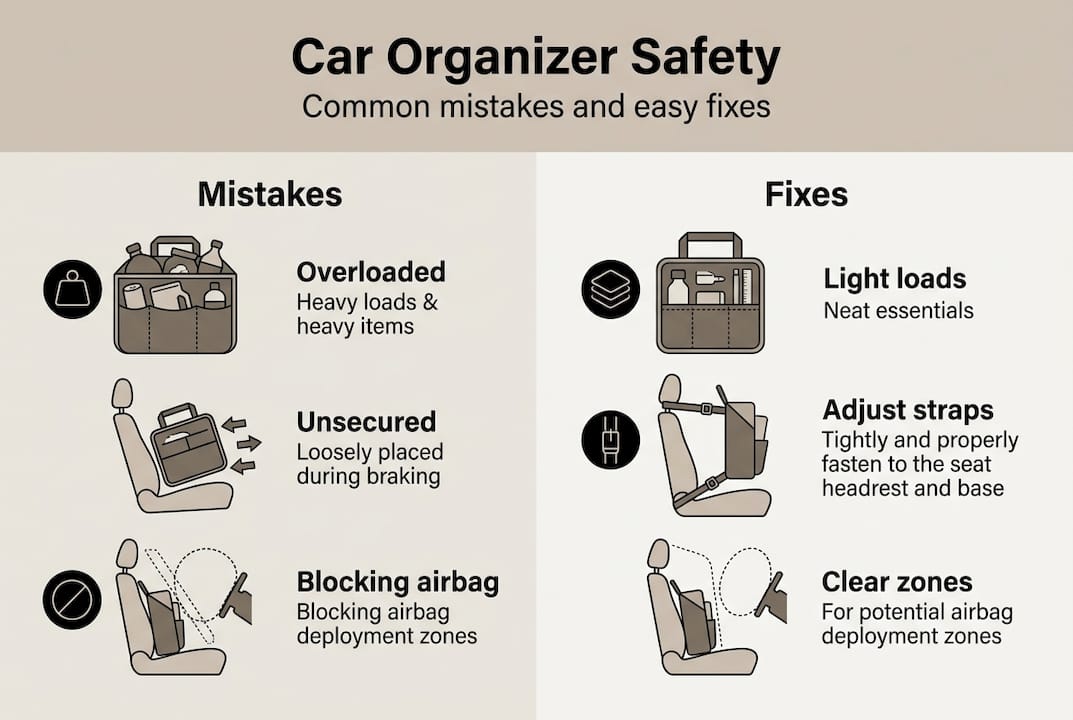
Blocking critical zones happens more often than drivers realize. Large organizers positioned incorrectly obstruct airbag deployment paths, preventing life-saving systems from functioning. Side curtain airbags deploy from roof pillars along windows. Seatback organizers must not extend above seat tops or wrap around sides where they interfere with deployment. Similarly, dashboard organizers that block passenger airbags create severe injury risks.
| Common mistake | Correct approach | Safety impact |
|---|---|---|
| Overloading backseat pockets | Limit to 1.65 lbs, move heavy items to trunk | Prevents projectile injuries during crashes |
| Loose strap attachment | Tighten straps until organizer doesn’t sag or shift | Maintains stability during sudden stops |
| Blocking airbag zones | Keep organizers below seat tops and away from pillars | Ensures airbags deploy without obstruction |
| Using wrong size organizer | Measure seat dimensions before purchasing | Provides proper fit and secure attachment |
| Ignoring manufacturer weight limits | Follow specified capacity for each compartment | Prevents strap failure and material tears |
Quick troubleshooting checklist:
- Shake the organizer firmly; it shouldn’t move more than half an inch
- Check that all straps thread through their designated loops
- Verify non-slip backing makes full contact with seat surfaces
- Confirm you can fully recline and adjust seats without resistance
- Test that organizer pockets remain accessible without reaching dangerously
- Ensure no compartments bulge or sag under their current load
Pro Tip: Consult size guides specific to your vehicle make and model before purchasing organizers. Seat dimensions vary significantly between compact cars, sedans, and SUVs. What fits perfectly in one vehicle may not attach securely in another. Manufacturers often provide compatibility charts that prevent costly mistakes.
Proper securing isn’t optional. It’s the difference between convenient storage and a dangerous projectile. Every strap, every attachment point, every weight limit exists to protect you and your passengers. Never compromise on installation quality.
If you’re uncertain about compatibility or proper setup, review the car organizer selection guide for detailed specifications and vehicle-specific recommendations.
Explore car organization solutions at Rottalab
Now that you understand proper setup and maintenance, you’re ready to implement a professional-grade organizational system. Rottalab offers carefully curated car organizers engineered for both safety and convenience. Each product undergoes rigorous testing to ensure secure attachment and durable construction that withstands daily use.
Our collection includes seatback organizers with reinforced straps, trunk solutions with adjustable dividers, and specialized accessories for every vehicle type. Whether you’re a daily commuter needing quick access to essentials or a family requiring extensive storage for passengers, you’ll find solutions designed specifically for your situation.

Explore the complete range of car organization accessories to find products that match your vehicle and lifestyle. The SeatVault Deluxe Car Organizer delivers premium storage with enhanced safety features, while our broader car safety accessories collection ensures comprehensive protection for every journey. Quality organization transforms your driving experience from chaotic to controlled.
Frequently asked questions
How do I choose the right car organizer for my vehicle?
Match organizer dimensions to your specific vehicle model by checking manufacturer compatibility charts before purchasing. Consider your primary usage pattern: commuters benefit from console organizers with charging ports, families need backseat solutions with multiple compartments, and SUV drivers require trunk organizers with collapsible dividers. Prioritize products with adjustable straps and non-slip bases that accommodate different seat styles. Browse car organization accessories filtered by vehicle type for targeted recommendations.
Can car organizers interfere with airbags or visibility?
Yes, improperly positioned organizers can obstruct airbag deployment or block driver sightlines. Always place organizers away from airbag zones including dashboard passenger airbags and side curtain systems along roof pillars. Keep seatback organizers below seat tops and verify they don’t extend around seat sides. Before driving, sit in the driver’s position and confirm all mirrors provide unobstructed views and no organizer components appear in your peripheral vision.
How often should I clean and audit my car organizer setup?
Establish a three-tier maintenance schedule for optimal results. Remove trash daily when exiting your vehicle to prevent accumulation. Perform weekly sorting sessions where you empty compartments, discard unused items, and wipe surfaces clean. Conduct comprehensive monthly audits that include inspecting strap condition, reorganizing zones based on evolving needs, and rotating seasonal items. This routine prevents clutter from returning and ensures your organizational system continues serving your actual requirements.
What items should never go in a car organizer?
Avoid storing anything that becomes dangerous during crashes or extreme temperatures. Never place heavy tools, glass bottles, or sharp objects in backseat organizers where they pose projectile risks. Exclude temperature-sensitive items like medications, electronics, and aerosol cans that degrade or explode in heat. Keep valuable documents and irreplaceable items at home rather than risking loss or theft. Store only items you genuinely use during drives, and ensure combined weight stays well below manufacturer limits for each compartment.
How do I prevent my car organizer from sagging over time?
Sagging indicates either overloading or insufficient strap tension during installation. Redistribute items to place heavier objects in lower compartments and reduce overall weight per pocket. Retighten all straps monthly, as vibration and temperature fluctuations gradually loosen connections. Choose organizers constructed from reinforced materials rather than thin fabric that stretches under load. If sagging persists despite these measures, the organizer likely exceeds its weight capacity for your usage pattern and requires replacement with a more robust solution designed for heavier loads.